Driveway Projects
Driveway Widening in Ontario: Permits, Base and Seams
Quick answer: Driveway widening adds a strip of new asphalt beside your existing driveway. Done well, the strip gets its own compacted base, a clean bonded seam and a grade that still sheds water. If the work changes the entrance at a municipal road, you need a permit first; in Kawartha Lakes, a 2026 residential entrance permit is a $250 fee plus a $2,000 deposit.
A second car, a trailer or a boat for the summer, and suddenly a single-lane driveway is not enough. This guide covers driveway widening in Ontario, sometimes called a driveway extension: when you need a permit, why the added strip needs its own base, how to stop the new seam from cracking and what to ask a contractor before you book.
Contents
- What Does Driveway Widening Involve?
- Do You Need a Permit to Widen a Driveway?
- Why Does the New Strip Need Its Own Base?
- How Do You Keep the Seam From Cracking?
- Should You Resurface the Old Driveway at the Same Time?
- What Should You Ask a Contractor?
- Key Takeaways
- FAQ
What Does Driveway Widening Involve?
Driveway widening means building new driveway beside the old one. An asphalt driveway extension goes through every step a full driveway does: digging out, grading, building and compacting a gravel base, and paving. The only difference is that one edge meets asphalt that is already there.
That shared edge is why widening is its own kind of job. The new section has to sit at the same height as the old one, slope the same way and bond to it at the seam. If any of those are off, the line between old and new becomes the first place water gets in.
Most of the widening jobs homeowners ask about fall into three types:
- A second lane beside a single-car driveway.
- A parking pad off one side, for a trailer, boat or RV.
- A wider entrance where the driveway meets the road, so two cars can pass or turn.
The third type is the one most likely to need a permit, because it changes the part of the driveway on public land.
Do You Need a Permit to Widen a Driveway?
You need a permit when the work changes a road entrance. In the City of Kawartha Lakes, an entrance permit is approval to construct, alter or retain any access from private property to a City road. The City’s definition also covers tiling and filling in a roadside ditch.
For 2026, the City lists a $250 fee and a $2,000 deposit for a residential entrance. The proposed entrance has to be staked so it can be inspected, and the City warns that winter snow cover can delay inspections. The contractor also needs a separate permit to work in the road allowance, utility locates and proof of insurance.
Widening that stays entirely on your own lot is a different question. Municipal zoning by-laws often limit how much of a front yard can be paved, and the City’s lot grading guidelines say drainage must not harm neighbouring properties. Check both before you settle on a size.
If your entrance is on a provincial highway or a county road, the road authority is different, so ask your municipality who issues the permit for your address.
Planning a widening? Ask for a free quote and we will check your entrance and the ground under the new strip before you commit.
Why Does the New Strip Need Its Own Base?
Asphalt is only as good as the gravel under it. Laying new asphalt over soil, sod or a thin skim of gravel gives a strip that settles, cracks and pulls away from the old driveway within a few winters. The added section needs the same excavation and compacted base as the original.
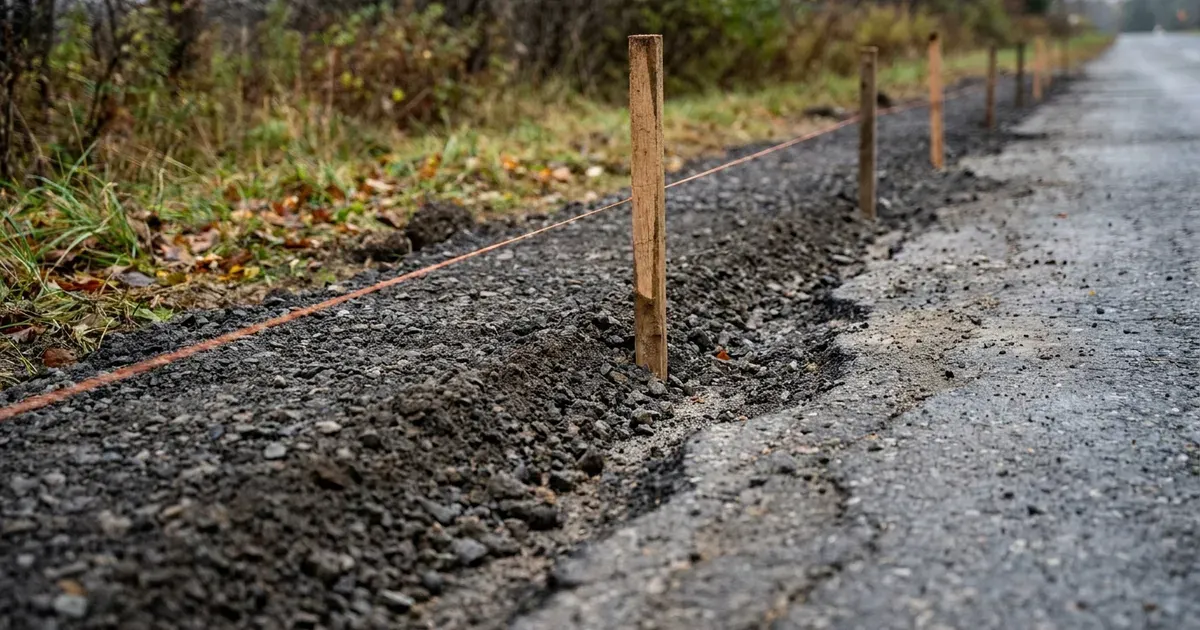
Ontario’s freeze-thaw cycle is hard on a weak base. Water that soaks into soft ground freezes, expands and lifts the surface above it, which is the damage we describe in our guide to frost heave and driveway potholes. A widened strip on a poor base heaves on its own schedule, and the seam is where you see it first.
Grading matters just as much. The new section should keep the same fall away from the house as the rest of the driveway, and it should not send water toward the garage, the lawn or a neighbour. Our guide to driveway grading in Ontario covers the slopes to aim for.
How Do You Keep the Seam From Cracking?
A good seam starts with a solid edge. The existing asphalt is cut back to a straight line where it is still sound, so the new mix meets firm material rather than a crumbling edge. The new base is compacted right up to that line.
When the asphalt goes down, the joint is bonded and compacted so the two surfaces sit flush. A lip at the seam traps water and catches a snowplow blade. A gap lets water into the base.
After the first season, watch the joint. A fine line where old meets new is normal. A crack that opens, or an edge that sinks, means water is getting under it, and it should be sealed before winter, as with any driveway crack.
Should You Resurface the Old Driveway at the Same Time?
Resurface too if the old driveway is worn. New asphalt is black and older asphalt fades to grey, so a widened strip stands out for several seasons. Resurfacing both gives one colour, one height and no visible seam.
It also saves a second visit. If the existing driveway is close to needing work anyway, doing both while the crew and equipment are on site usually costs less than two separate jobs. Our guide to asphalt driveway resurfacing explains how to tell whether a driveway is a candidate.
If the old driveway is in good shape, widening on its own is fine. The colour difference fades with time and sunlight.
What Should You Ask a Contractor?
Ask about the base and the seam, not only price. Two quotes for the same widening can describe very different jobs, and these questions help you compare them. At Harwick Paving, we walk the lot with you and answer each one before we price:
- Who applies for the entrance permit, if one is needed, and who pays the fee and deposit?
- How deep will you dig, and how much compacted gravel goes under the new strip?
- How will you cut and prepare the old edge before you pave?
- Where will water go once the driveway is wider?
- Will you resurface the existing driveway, or only pave the new section?
- What guarantee covers the work, including the seam?
As we explain in our post on what goes into your asphalt driveway cost in Ontario, base depth, drainage and access all move the price. A low quote that skips the base is not a saving.
Key Takeaways
- Driveway widening adds new driveway beside the old one, and the new strip needs the full excavation, grading and base.
- In Kawartha Lakes, changing the entrance at a City road needs a permit; the 2026 residential fee is $250 plus a $2,000 deposit.
- Check zoning and drainage rules for widening that stays on your own lot.
- The seam is the weak point: cut back to a sound edge, compact to it and keep the surfaces flush.
- Resurfacing a worn driveway at the same time removes the colour difference and the visible seam.
- Compare quotes on base depth, seam preparation and drainage, not on price alone.
FAQ
Do I need a permit to widen my driveway in Ontario?
You need one if the work changes the entrance where your driveway meets a municipal road. In the City of Kawartha Lakes, an entrance permit covers constructing or altering any access to a City road, including filling in a roadside ditch, and a 2026 residential application carries a $250 fee and a $2,000 deposit. Widening that stays on your own lot is usually a zoning question instead, so check with your municipality first.
Can new asphalt be joined to an old driveway?
Yes, if the joint is built properly. The old edge is cut back to sound, straight asphalt, the new strip gets its own compacted gravel base, and the seam is bonded and compacted so water cannot get in. A joint laid against a crumbling edge, or over a thin base, is the spot where cracks start.
Will a widened section match the colour of my old driveway?
Not at first. New asphalt is black and older asphalt fades to grey, so a new strip stands out for a few seasons. If the existing driveway is worn, resurfacing it at the same time gives one even surface and removes the seam from view.
When is the best time to widen a driveway?
Plan it for the paving season, from late spring to early fall, when the ground is not frozen and asphalt can be laid and compacted properly. Book permits early: Kawartha Lakes notes that entrance inspections can be delayed in winter because the staked location has to be visible and free of snow.
How wide should a widened driveway be?
Wide enough for the vehicles you park and room to open doors and walk past them, without pushing water onto the lawn or a neighbour’s lot. Your municipality’s zoning by-law may limit how much of a front yard can be paved, so confirm the allowed width before you commit to a layout.
Get a Free Driveway Widening Quote
Harwick Paving widens existing driveways and paves new ones across Cannington, Lindsay, Bobcaygeon, Fenelon Falls, Peterborough and Sunderland. We will look at your lot, your entrance and where the water goes, then give you a free, no-obligation quote backed by our one-year workmanship and material guarantee. Call 705-341-4113 or request your quote online.