Driveway Care
Frost Heave Driveway Damage and Potholes After Ontario Winters
Quick answer: A frost heave driveway problem starts when water in the ground under the asphalt freezes, swells and lifts the pavement unevenly. Potholes follow when that water gets into cracks, freezes again and breaks the asphalt loose. Hairline cracks are cosmetic and cheap to fill, while humps, sunken spots and repeat potholes usually mean the base needs work.
If you are looking at a raised, cracked or potholed driveway after the snow melts, you are not alone. We hear from homeowners across the Kawarthas, Peterborough and Durham Region every spring, and most of what they are seeing comes from the same winter process. This guide explains what is happening under your driveway and what you can do about it.
Contents
- What Causes a Frost Heave Driveway in Ontario?
- Why Do Driveway Potholes Form After Winter?
- Which Winter Driveway Damage Is Cosmetic and Which Needs Repair?
- What Can You Do Before Freeze-Up?
- When Does Patching Work and When Must the Base Be Rebuilt?
- Why Do Base Depth and Drainage Matter at Installation?
- Key Takeaways
- FAQ
What Causes a Frost Heave Driveway in Ontario?
Frost heave is freezing soil water lifting the pavement. In the Kawarthas and Durham Region, the water comes from rain, snowmelt and groundwater. The ice forms in layers called ice lenses, and each one lifts the ground above it a little more.
Not every driveway heaves, and frost heave asphalt damage depends on the ground beneath it. Ice lenses need two things: soil that holds and passes water through, such as silty soil, and a steady supply of water to feed them. Frost heaving is well documented in soil science, and it is one of the reasons road surfaces crack and break up each spring.
The lift is also uneven. One part of a driveway may sit over wetter soil or a low spot where water collects, so it rises more than the part beside it. That uneven movement is what cracks asphalt, even though the material itself is flexible.
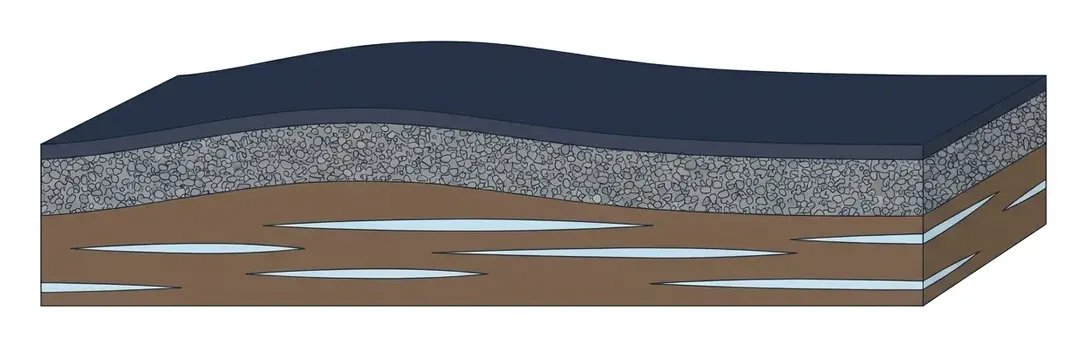
When the ground thaws, the lifted area settles again, but not always back to where it started.
If you have wondered why one stretch of your driveway ripples and the rest stays flat, the soil and drainage under that stretch are usually the answer. The same winter can leave a neighbour’s driveway untouched.
Why Do Driveway Potholes Form After Winter?
Potholes form when water in cracks freezes and breaks the asphalt loose. In the Kawarthas, spring is when most appear, because the thaw leaves the base soft and wet. A pothole is usually the end of a problem that began as a small crack.
The cycle repeats every time the temperature crosses zero. Water seeps in during a thaw, freezes overnight, and pries the crack wider. The City of Toronto describes the same process on its pothole page, and notes that a milder winter with more freeze-thaw cycles tends to produce more potholes than a steadily cold one.
Once the surface breaks, traffic finishes the job. A tire over a soft, wet spot loosens the asphalt around the edge, and the hole grows. For a closer look at how cracks start, see our guide on why asphalt driveways crack.
Which Winter Driveway Damage Is Cosmetic and Which Needs Repair?
Hairline cracks are cosmetic; humps, dips and potholes need repair. The difference is whether the base underneath has been affected, and the table below matches each symptom to its likely cause and the right fix, so you can tell a quick job from a bigger one.
| What you see | Likely cause | What to do |
|---|---|---|
| Thin hairline cracks | Age, sun and shrinkage | Clean and fill, then sealcoat |
| Wide or spreading cracks | Freeze-thaw and water reaching the base | Fill promptly, have the edge checked |
| Raised hump or ripple | Frost heave from wet soil below | Wait for full thaw, then reassess; repair if it stays |
| Sunken or dipped area | Soft base or settling after thaw | Have the base checked, since patching alone rarely holds |
| Web of small cracks (alligator) | Base failing under load | Cut out and rebuild that section |
| Pothole | Water, freeze-thaw and traffic | Patch if isolated; rebuild if it keeps returning |
| Crumbling edge | No edge support, poor drainage, roots | Repair the edge and fix the water source |
If you are unsure which row you are in, the safest move is a quick look by someone who works on driveways every day. Our Bobcaygeon repair page shows what a driveway repair job covers in practice.
Not sure whether your driveway needs a patch or a rebuild? Call Harwick Paving on 705-341-4113 and we will come and look, with a free, no-obligation quote.
What Can You Do Before Freeze-Up?
Before freeze-up, keep water out of the driveway and its base. Late fall, before the first hard frost, is the right window in the Kawarthas. These steps cost little compared with a spring repair, and most of them are jobs a homeowner can do.
- Fill cracks in the fall. A filled crack gives water nowhere to go. A crack left open through winter is where most potholes begin.
- Move water away from the driveway. Point downspouts and sump discharge away from the pavement, and check that the ground beside the driveway slopes away rather than toward it.
- Keep ditches and culverts clear. Leaves and debris can trap water at the driveway edge, exactly where it can soak into the base.
- Sealcoat on schedule, after crack filling. Sealer protects the surface but does not repair cracks, so fill first. Our guide on when to sealcoat your driveway in the Kawarthas covers timing.
- Take care when clearing snow. Raise the blade or use skid shoes so it does not catch and tear the asphalt edge, and pile snow where the meltwater will drain away from the driveway, not back under it.
For the full routine through the year, see our asphalt driveway maintenance guide.
If you would rather have a paver check your cracks before the ground freezes, call us on 705-341-4113 for a free quote.
When Does Patching Work and When Must the Base Be Rebuilt?
Patching works when damage is small and the base is firm. If the same spot fails again, the base is the problem, and the base has to be rebuilt. A new layer of asphalt over a base that is still failing carries the damage straight back up.
Patching is usually enough for one pothole with solid ground around it, a few cracks, or a small crumbling edge. Watch for these signs that point to a deeper problem:
- The same area reopens after being patched
- Alligator cracking covers a large part of the driveway
- A hump or dip is still there after the ground has fully thawed
- Water pools in the same low spot after rain
In those cases, the failed section is cut out, the base is checked and rebuilt where needed, and new asphalt goes on top. Resurfacing a whole driveway is a different job, and our guide to asphalt driveway resurfacing in the Kawarthas explains when it makes sense. Cost depends on how much of the driveway is affected, so we quote after seeing it.
Why Do Base Depth and Drainage Matter at Installation?
A deep, compacted base and a grade that sheds water protect a driveway. Base depth and drainage decide how much water reaches the ground under the asphalt at all. Less water under the pavement means less for frost to lift.
Skimping on the base is the most common reason a new-looking driveway fails early. It looks fine for a year or two, then the first hard winters show where the support was thin. The thickness of the asphalt matters too, and our post on asphalt driveway thickness in Ontario covers that side.
Drainage is just as important. A driveway that slopes water toward a low corner, or sits where ditches cannot carry it away, gives winter exactly what it needs. That is why we look at the ground, the grade and the water path when we quote a new driveway, not just the surface area.
All Harwick Paving asphalt work is backed by our 1-Year Workmanship and Material Guarantee.
Key Takeaways
- Frost heave happens when water in the soil under the driveway freezes, swells and lifts the pavement unevenly.
- Driveway potholes start as cracks that let water in, then freeze-thaw cycles and traffic break the asphalt loose.
- Hairline cracks are cosmetic. Humps, dips, alligator cracking and repeat potholes usually point to the base.
- Fall is the time to act: fill cracks, move water away and sealcoat after the cracks are filled.
- A patch works on small, isolated damage. A spot that keeps failing needs its base rebuilt.
- Base depth and drainage at installation are the best protection against winter driveway damage.
FAQ
Can frost heave damage an asphalt driveway?
Yes, frost heave asphalt damage shows up as raised humps, uneven cracking and sunken spots after winter. It happens when water in the soil under the driveway freezes and swells, lifting some areas more than others. A small amount of movement can settle back in spring, but cracks it leaves behind need filling before more water gets in.
Will a frost heaved driveway go back down by itself?
Sometimes, partly. When the ground thaws, a heaved section often settles, but it rarely returns exactly to where it was, and the cracks stay open. If a hump or dip is still there after the ground has fully thawed, or it comes back every winter, the base underneath usually has a drainage or support problem that needs a proper look.
Why do driveway potholes show up in spring?
Driveway potholes appear in spring because winter freeze-thaw cycles do the damage and the thaw exposes it. Water gets into cracks, freezes and expands, then the base turns soft and wet as the ground thaws, and tires knock out the loosened asphalt. Most potholes began as an unfilled crack the fall before.
Can I patch a driveway pothole myself?
A shallow, isolated pothole can be patched with cold-patch asphalt from a hardware store as a short-term fix. Clean out loose material, fill it, and compact it well. If the same spot reopens, the hole is wide, or the area around it is cracked and soft, the base needs repair and a patch will not last.
Can I prevent frost heave damage to my driveway?
You can reduce it, though you cannot stop winter. Fill cracks in the fall, steer roof and yard water away from the driveway, keep ditches and culverts clear, and sealcoat on schedule. The biggest factor is how the driveway was built, because a well-compacted base with good drainage gives frost less water to work with.
Get a Free Quote for Your Driveway
If your driveway has a raised section, a pothole or cracks you are not sure about, we will take a look and give you a straight answer, even if the answer is that it can wait. Harwick Paving serves Cannington, Lindsay, Bobcaygeon, Fenelon Falls, Peterborough and Sunderland. Call 705-341-4113 or request your free quote online.