Driveway Care
Tar and Chip Driveway vs Asphalt: Rural Ontario Guide
Quick answer: A tar and chip driveway is a thin sprayed-on layer of liquid asphalt covered with crushed stone, while an asphalt driveway is a thicker, compacted paved layer. Tar and chip is the lower-cost, rougher-looking option that wears sooner. Asphalt costs more up front but gives a smoother, longer lasting surface, especially where you plow and the ground freezes hard.
If you own a long lane in the Kawarthas, you have probably wondered whether a tar and chip driveway would save money over asphalt. This guide compares tar and chip vs asphalt on what matters out here: durability, snow plowing, freeze-thaw, look and cost drivers.
Contents
- What Is a Tar and Chip Driveway?
- How Do Tar and Chip and Asphalt Compare Side by Side?
- How Does Each Handle Snow Plowing and Freeze-Thaw?
- What Drives the Cost of Each Surface?
- Which Suits a Long Rural Lane and Which Suits a Town Driveway?
- Key Takeaways
- FAQ
What Is a Tar and Chip Driveway?
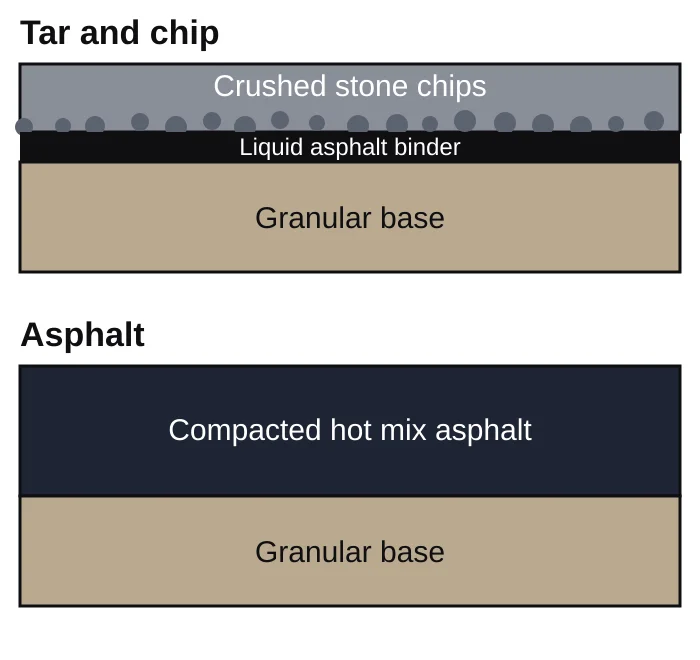
It is liquid asphalt sprayed down, then covered with rolled-in crushed stone. It is also called a chip seal driveway. Chatham-Kent describes the same process for its roads, and notes the surface has loose stone at first that may resemble a gravel road.
It is a thin wearing surface, not a structural layer. Pavement Interactive calls it a thin protective surface applied to a pavement or base course, and says chip seals are still best suited to rural, low-volume roads.
Asphalt is different. Hot mix is laid in a compacted layer over a prepared granular base, and the base does most of the work of carrying the load and handling frost. Our guide to the asphalt paving process walks through how that layer goes down.
How Do Tar and Chip and Asphalt Compare Side by Side?
Asphalt is smoother and longer lasting; tar and chip is cheaper. Asphalt is a thicker structural layer, while tar and chip is a thin wearing surface. The table below sets the two against the questions Kawarthas homeowners ask most, from looks and noise to upkeep and cost.
| Tar and chip (chip seal) | Asphalt | |
|---|---|---|
| What it is | Sprayed binder with rolled-in stone | Compacted hot mix layer on a granular base |
| Look | Rough, stony texture | Smooth, uniform, dark finish |
| Loose stone | Yes, especially at first | No |
| Noise | Noisier than conventional asphalt | Quieter |
| Service life | 2 to 4 years common, 5 achievable (one pavement reference) | Longer when built on a sound base |
| Snow plowing | Blade can shave off stones | Clears cleanly with care |
| Upkeep | Reseal as the surface wears | Crack fill and sealcoat |
| Upfront cost | Often lower | Higher |
The service life figure comes from a general pavement reference, not from a Kawarthas driveway, so treat it as a rough guide. Local soil, traffic and drainage move it either way.
How Does Each Handle Snow Plowing and Freeze-Thaw?
Plowing is the weak point of tar and chip. A plow blade can shave off the taller stones, according to the pavement reference above, so a plowed lane loses chips each winter. You will find those stones in the snowbank and along the lane edges every spring.
Freeze-thaw is hard on both surfaces, because water gets in, freezes and expands. A thin chip layer does little to stiffen a weak base, so frost damage shows through it. Asphalt on a deep, compacted base with good drainage gives frost less to work with, and our guide on frost heave and driveway potholes explains how that damage starts.
Asphalt also needs care at the blade. Raise it slightly or use skid shoes so the edge is not torn. For the full yearly routine, see our asphalt driveway maintenance guide.
What Drives the Cost of Each Surface?
The base, length and access drive most of the price. Tar and chip is often described as the more affordable surface, and Chatham-Kent says so. We do not offer it, so we will not guess at tar and chip prices or quote numbers we cannot back up.
For any driveway, these are the factors that move a quote:
- The base underneath, and whether soft spots need digging out
- Removal of an old surface
- Drainage and grade
- Length, width and whether equipment can reach the job
- Thickness, if you run heavy vehicles or trailers
We cover these in detail in our post on what goes into your asphalt driveway cost in Ontario. A cheaper surface on a poor base fails early, whichever one you pick.
Which Suits a Long Rural Lane and Which Suits a Town Driveway?
A long, low-traffic lane can suit tar and chip; town driveways suit asphalt. It comes down to how you use the driveway, how often you plow it, how close it runs to the house and how much the finish matters to you.
Tar and chip makes sense when:
- The lane is long and low traffic
- You want a sealed, dust-free surface rather than gravel
- You accept a rough look, some loose stone and more noise
- You are happy to reseal on a regular basis
For rural driveway paving, asphalt makes sense when:
- You plow or blow snow often
- The driveway sits close to the house, garage or neighbours
- You walk, bike or park on it daily and want an even surface
- You want the longest life from a single install
Many of our customers across the Kawarthas pick asphalt for the part of the lane near the house and leave the far end as gravel. If you are weighing asphalt against another hard surface, our comparison of asphalt vs concrete driveways in Ontario covers that choice.
Our work at Harwick Paving is asphalt: we pave residential driveways, repair and patch asphalt, and resurface worn surfaces. If you are not sure which fits your lane, call us on 705-341-4113 or see our paving services and we will give you a straight answer, even if it is not asphalt.
Once the work is done, our guide to how long an asphalt driveway takes to cure tells you when you can drive on it.
Key Takeaways
- A tar and chip driveway is a thin sprayed binder with rolled-in stone; asphalt is a thicker compacted layer.
- Tar and chip is often cheaper up front, but it is rougher, noisier and sheds loose stone.
- One pavement reference puts chip seal life at 2 to 4 years, with 5 achievable.
- Plow blades can shave stones off a chip seal, so plowing favours asphalt.
- The base and drainage decide how either surface handles freeze-thaw.
- A long, low-traffic lane can suit tar and chip; a town driveway usually suits asphalt.
FAQ
Is tar and chip cheaper than asphalt for a driveway?
It is often described as the more affordable surface, and one Ontario municipality calls it more affordable than other road maintenance methods. Your price still depends on the base, access, length and how much prep the lane needs. A short, cheap surface that wears out sooner can cost more over time, so compare what each quote includes.
Can you plow snow on a tar and chip driveway?
Yes, but plows are harder on it. A pavement reference notes that a plow blade can shave off the taller stones, so some chips will end up in the snowbank. Raise the blade slightly, use skid shoes and expect to sweep up loose stone along the edges each spring.
How long does a tar and chip driveway last?
A pavement reference says a two to four year service life is common for a chip seal, with five years achievable. Traffic, base condition and winter weather all change that. Hot mix asphalt is a thicker structural layer, so it is normally the longer lasting choice when it is built on a sound base.
Can I put asphalt over a tar and chip driveway?
Often yes, if the base underneath is sound. The loose or worn chip surface and any soft spots are dealt with first, then new asphalt goes on top. If the lane is failing because of drainage or a weak base, that has to be fixed before any new surface will last.
Is tar and chip a good choice for a long rural driveway?
It can suit a long, low-traffic lane where the goal is a sealed, dust-free surface at lower cost. The trade-offs are a rougher look, loose stone, more noise and more upkeep. If you plow often or want a clean, even finish, asphalt is usually the better fit.
Get a Free Quote for Your Driveway
Harwick Paving serves Cannington, Lindsay, Bobcaygeon, Fenelon Falls, Peterborough and Sunderland. We will look at your lane, talk through the options and give you a free, no-obligation quote. Call 705-341-4113 or request your quote online.